
Beauty Product Photography in Los Angeles: How to Make Skincare and Cosmetics Stand Out Online
Beauty is one of the most visually competitive industries online.
A customer scrolling through skincare, cosmetics, haircare, fragrance, or personal care products can encounter dozens of brands within minutes. Many offer similar benefits, use similar ingredients, and compete at similar price points.
Before a customer reads an ingredient list or product description, there is a good chance they have already formed an opinion based on the photography.
That makes beauty product photography much more than a way to document what a product looks like.
For brands competing online, photography helps communicate quality, texture, efficacy, personality, and value before someone ever experiences the product in person.
For beauty companies looking for beauty product photography in Los Angeles, the challenge is therefore not simply creating attractive images. It is creating a visual system that makes the product recognizable, desirable, and easy to understand across eCommerce, advertising, social media, email, and retail.
Here’s what goes into doing that effectively.

Why Is Beauty Product Photography So Important for Online Brands?
When someone shops for beauty products in a physical store, they can pick up the packaging, examine the color, compare its size, test a texture, or sometimes sample the formula.
Online, photography has to replace much of that experience.
Strong beauty product photography helps customers answer questions such as:
- What does the packaging actually look like?
- How large is the product?
- What does the formula feel like?
- Is the brand premium, clinical, natural, playful, or luxurious?
- How does the product look on real skin?
- How would I use it?
- Does this feel like a brand I can trust?
The better the imagery answers those questions, the easier it becomes for customers to understand what they are buying.
What Makes Beauty Product Photography Different From General Product Photography?
Beauty products create some unique technical and creative challenges.
Packaging frequently includes:
- Reflective glass
- Metallic caps
- Transparent bottles
- Glossy plastics
- Frosted surfaces
- Pumps
- Droppers
- Foils
- Small typography
Then there are the formulas themselves.
A skincare product photographer may need to capture the translucency of a serum, richness of a moisturizer, lightness of a gel, or sheen of an oil.
A cosmetics photographer may need to accurately reproduce lipstick pigment, foundation shades, metallic eyeshadow, or the finish of a highlighter.
These details directly influence how customers perceive the product.
That is why beauty photography requires both technical precision and an understanding of the category.
How Do You Make Skincare Products Stand Out Online?
Skincare photography needs to communicate something that is difficult to photograph:
how a product feels.
Customers want to know whether a moisturizer looks rich or lightweight. They want to understand whether a serum feels silky, watery, glossy, or concentrated.
Photography can help communicate those characteristics through:
- Texture swatches
- Macro photography
- Droplets
- Smears
- Product application
- Ingredient-inspired imagery
- Skin close-ups
- Product-in-hand photographs
The goal is to make the formula feel almost tangible through the screen.
For brands searching for a skincare product photographer in Los Angeles, this ability to translate texture into imagery should be an important consideration.
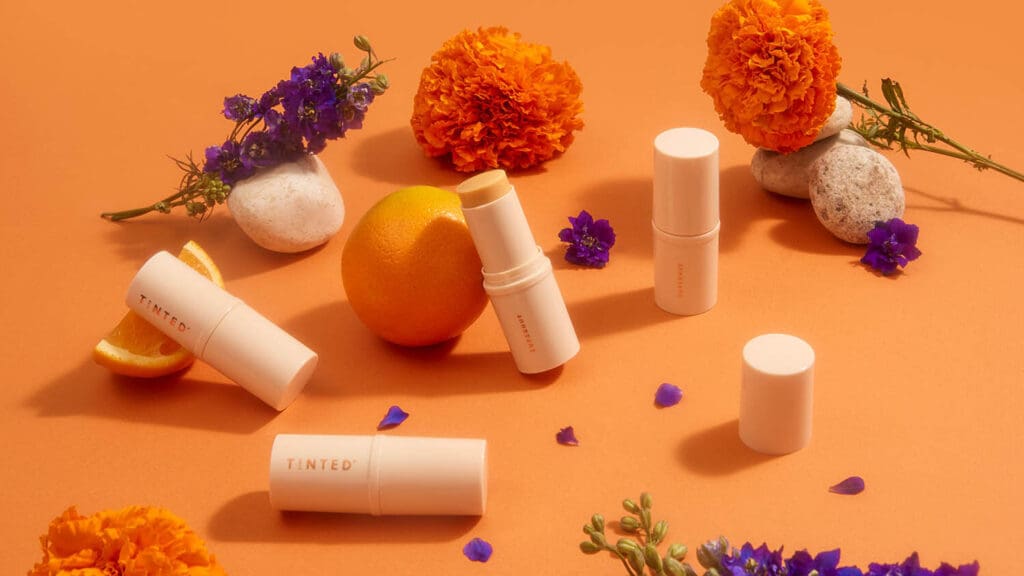
Cosmetics Photography Needs to Make Color and Texture Feel Real
Cosmetics present a slightly different challenge.
Color accuracy becomes incredibly important.
When customers shop for:
- Lipstick
- Blush
- Foundation
- Concealer
- Eyeshadow
- Highlighter
…the difference between two shades can determine whether someone purchases the product.
Texture also matters.
A lipstick can be matte, satin, glossy, sheer, or highly pigmented. An eyeshadow might be metallic, glittery, creamy, or soft.
Photography should help communicate these characteristics rather than simply showing the packaging.
Product Texture Photography Can Become Part of the Brand Story
Texture photography does not have to be purely informational.
It can also become one of the most creative elements of a beauty campaign.
Creams, gels, powders, oils, foams, pigments, and liquids can create shapes and compositions that visually reinforce the product’s benefits.
A hydrating skincare product might use fluid, luminous textures.
A rich moisturizer might be photographed with sculptural cream swatches.
A highly pigmented cosmetics collection could use bold smears and graphic color.
The formula itself becomes a creative material.
Beauty Product Photography Should Reflect Your Brand Positioning
One of the biggest mistakes beauty brands can make is following a visual trend simply because other brands are doing it.
Photography should reinforce what makes the brand different.
A clinical skincare brand may benefit from:
- Precision
- Clean compositions
- Controlled lighting
- Minimal environments
- Ingredient-focused imagery
A luxury beauty brand may require:
- Rich materials
- Sophisticated lighting
- Elegant compositions
- Greater visual restraint
A playful cosmetics company might use:
- Bold color
- Graphic compositions
- Unexpected props
- Strong texture
A clean beauty brand may lean toward:
- Natural materials
- Real skin
- Botanical references
- Softer environments
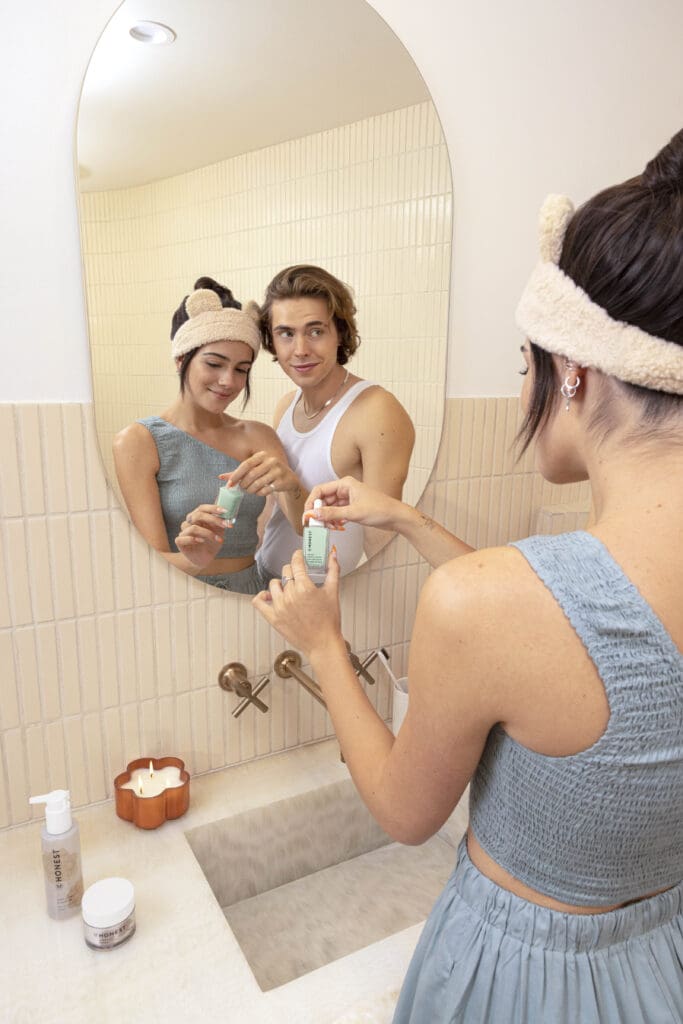
Product Photography and Lifestyle Photography Should Work Together
Product-only imagery gives customers clarity.
Lifestyle photography gives them context.
The strongest beauty brands often use both.
A skincare campaign might combine a carefully lit serum bottle with imagery of someone incorporating that serum into their morning routine.
A lipstick campaign might combine product still life, texture swatches, close-up lips, and a wider lifestyle portrait.
This creates a much richer visual story.
Customers can understand the product while also imagining how it fits into their lives.
Product-in-Hand Photography Bridges Product and Lifestyle Content
One particularly useful format for beauty brands is product-in-hand photography.
It immediately provides:
- Scale
- Human connection
- Product visibility
- Usage context
- Personality
It can also be used across a huge range of marketing channels.
But successful product-in-hand photography requires more thought than simply placing a bottle in front of the camera.
Hand position, skin tone, nails, lighting, product orientation, expression, and composition all influence how the final image feels.
When done well, the product remains the hero while the human element makes it more approachable.
Beauty Product Photography for eCommerce Needs a Different Approach
Creative campaign photography can build desire.
eCommerce beauty photography needs to create clarity and confidence.
A strong product page might include:
- Front-facing product image
- Alternate product angle
- Packaging detail
- Product open or in use
- Formula texture
- Product-in-hand image
- Product on a model
- Grouped product range
- Ingredient-focused image
- Lifestyle usage image
These images answer different customer questions.
Rather than treating eCommerce photography as a secondary requirement, brands can build it into the overall creative production.
That helps campaign and product-page imagery feel like they belong to the same brand.
Beauty Photography Needs to Work for Social Media and Paid Advertising
A beautiful horizontal photograph does not automatically become a strong Instagram or Meta advertisement.
Modern beauty brands need content that can adapt to multiple formats.
That may include:
- Vertical compositions
- Square crops
- Horizontal website banners
- Tight product crops
- Images with negative space
- Product-focused advertising images
- Model-focused advertising images
Planning these formats before the shoot helps prevent valuable campaign images from becoming difficult to use later.
A photographer who understands commercial usage can compose images with those future placements in mind.
How Can Beauty Brands Make Their Product Photography More Distinctive?
Standing out does not necessarily mean creating the loudest image.
It means creating something recognizable.
Distinctiveness can come from:
- Lighting style
- Color palette
- Casting
- Backgrounds
- Materials
- Composition
- Texture
- Props
- Camera perspective
- Retouching style
When these elements are repeated consistently, they begin to create a visual language.
Eventually, customers can recognize the brand before they even see the logo.
That is one of the most valuable things strong commercial photography can achieve.
What Should You Look for in a Beauty Product Photographer in Los Angeles?
If you are hiring a photographer for an upcoming beauty campaign, consider whether they can demonstrate experience across:
- Beauty products
- Skincare textures
- Cosmetics
- Reflective packaging
- Product still life
- Models and skin
- Product-in-hand photography
- Lifestyle imagery
- eCommerce
- Advertising campaigns
More importantly, look for someone who wants to understand why the photographs are being created.
Where will they be used?
Who are they speaking to?
What should customers feel?
What makes the product different?
Those questions usually lead to stronger creative decisions.
Final Thoughts: Great Beauty Product Photography Makes Products Easier to Want
Beauty customers cannot smell a fragrance through a screen.
They cannot touch a moisturizer.
They cannot feel the finish of a lipstick.
Photography has to help fill those sensory gaps.
Great beauty product photography gives customers enough visual information to understand the product while creating enough emotion to make them want to experience it themselves.
For skincare and cosmetics brands looking for beauty product photography in Los Angeles, that means finding a photographer who understands products, textures, skin, people, branding, and commercial marketing.
Because online, your photography is not simply showing customers what you sell.
It is often their first experience of the product itself.
