
Commercial Cosmetics Photography in Los Angeles: What Beauty Brands Should Look For
Cosmetics may be small products, but photographing them well can be surprisingly complex.
A lipstick needs to communicate pigment and texture. Foundation needs to look believable on real skin. Reflective packaging needs to appear premium without distracting reflections. Eye makeup needs enough detail to demonstrate color and finish while still creating an image strong enough to stop someone scrolling.
Then all of those photographs need to work as part of a larger brand.
That is why choosing the right cosmetics photographer in Los Angeles is about much more than finding someone who can produce a technically perfect product shot.
Beauty brands need photographers who understand cosmetics, models, skin, product textures, advertising, eCommerce, and the increasingly complex ways visual content is used.
If your cosmetics brand is planning a product launch, advertising campaign, eCommerce refresh, or new visual direction, here is what to look for.
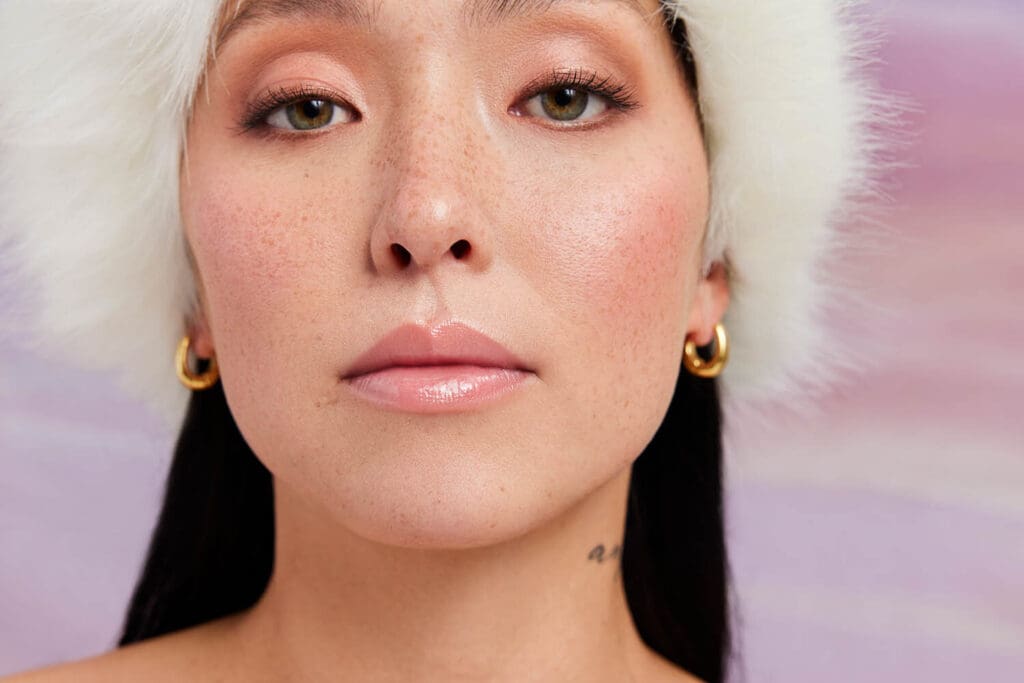
What Is Commercial Cosmetics Photography?
Commercial cosmetics photography is imagery created specifically to help beauty brands market and sell cosmetic products.
That can include photography for:
- Lip products
- Foundation
- Concealer
- Blush
- Bronzer
- Highlighter
- Mascara
- Eyeliner
- Eyeshadow
- Brow products
- Makeup tools
- Beauty accessories
Unlike straightforward product photography, a commercial cosmetics campaign may combine products, models, makeup artistry, textures, swatches, creative still life, and lifestyle imagery.
The photographer therefore needs to understand both sides of the equation:
the product and the person using it.
Why Los Angeles Is an Ideal Location for Cosmetics Photography
Los Angeles has a deep connection to the beauty and entertainment industries.
The city provides access to:
- Professional models
- Makeup artists
- Hair stylists
- Prop stylists
- Producers
- Retouchers
- Studios
- Creative agencies
- Commercial production crews
For cosmetics brands, that creates an enormous amount of creative flexibility.
A campaign can move from highly polished studio beauty portraits to colorful product still life, clean eCommerce images, and lifestyle content while remaining within the same production ecosystem.
Cosmetics Photography Needs to Communicate Color Accurately
Color is fundamental to cosmetics.
A customer shopping online needs confidence that the shade they see represents the product they will receive.
That makes accurate color management extremely important when photographing:
- Lipstick
- Foundation
- Concealer
- Blush
- Eyeshadow
- Highlighter
- Tinted products
Lighting, camera settings, monitors, post-production, and final export can all influence color.
At the same time, accurate color alone is not enough.
The image still needs energy, depth, texture, and personality.
Texture Photography Helps Customers Understand the Product
One of the limitations of online beauty shopping is that customers cannot physically interact with the formula.
Photography needs to help bridge that gap.
Texture imagery can communicate whether a product is:
- Creamy
- Matte
- Glossy
- Silky
- Lightweight
- Rich
- Metallic
- Shimmery
- Translucent
- Highly pigmented
Swatches, smears, droplets, crushed powders, applicator details, and macro photography can all help communicate these characteristics.
For brands searching for a beauty product photographer in Los Angeles, the ability to photograph formula textures is an important skill to look for.
The photograph should almost make the viewer feel like they know what the product will be like before they touch it.
Cosmetics Photography With Models Requires a Different Skill Set
Photographing a cosmetics product on a tabletop and photographing that same product on a person’s face are very different challenges.
Model-based cosmetics photography requires an understanding of:
- Skin
- Facial structure
- Makeup
- Lighting
- Expression
- Posing
- Macro detail
- Color
- Retouching
The photographer also needs to collaborate closely with the makeup artist.
If a campaign is built around a lipstick, the lip color, texture, shape, lighting, skin tone, and overall composition all need to work together.
If the focus is eye makeup, lighting needs to reveal the pigment and detail without losing the impact of the overall portrait.
This is why brands planning model campaigns should look specifically for a Los Angeles beauty and cosmetics photographer rather than assuming any product or portrait photographer can produce the same result.
Real Skin Is Changing the Look of Cosmetics Advertising
Beauty advertising is becoming more honest.
Consumers increasingly recognize heavy retouching, excessive smoothing, and unrealistic skin.
That creates an interesting opportunity for cosmetics brands.
Makeup can look even more compelling when customers can see it interacting with actual skin.
Pores, freckles, fine lines, and natural texture can give the image credibility.
The objective is not to make a commercial campaign look unfinished.
It is to create polished beauty imagery without removing the characteristics that make the person believable.
For modern cosmetics brands, thoughtful retouching and authentic skin can become part of the visual identity rather than something that needs to be hidden.
Diversity and Representation Matter in Cosmetics Photography
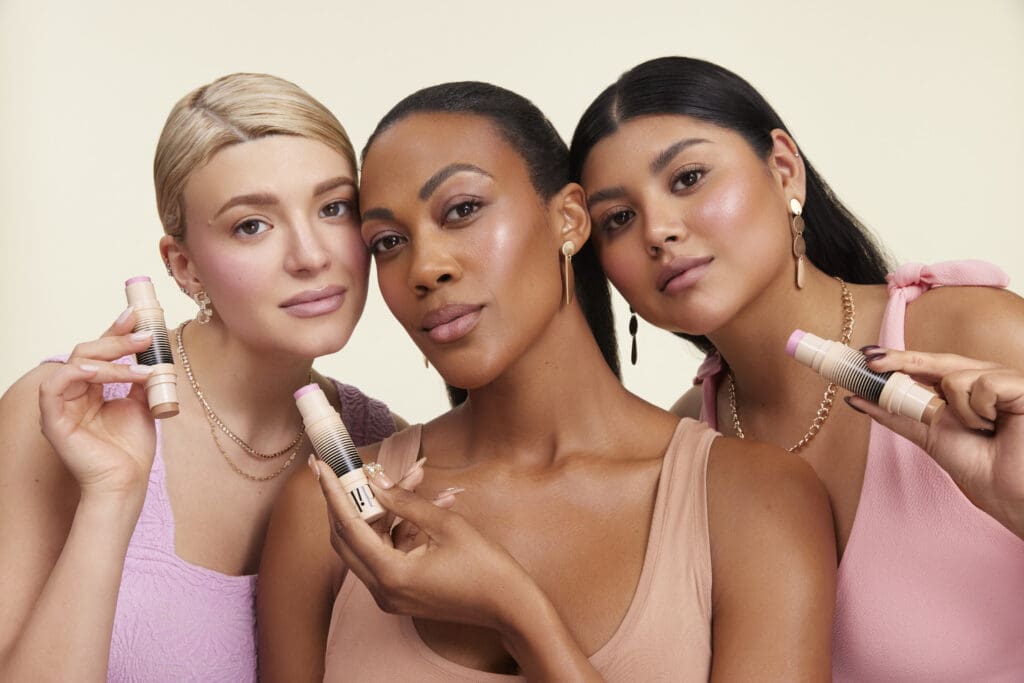
Cosmetics products interact differently with different people.
Foundation shades, lipstick colors, eye products, blushes, and highlighters can appear dramatically different across skin tones.
For that reason, representation is particularly important in cosmetics advertising.
Brands should think carefully about:
- Skin tone
- Age
- Facial characteristics
- Hair texture
- Personal style
- Cultural representation
Los Angeles offers an exceptionally diverse casting pool, making it possible for beauty brands to build campaigns around a much broader and more realistic view of their customers.
But diversity also needs to extend behind the camera.
Lighting different skin tones beautifully requires experience and attention. The goal should never be to make everyone conform to the same visual treatment.
Each person should be photographed in a way that celebrates their individual characteristics.
Product-in-Hand Photography Connects Cosmetics With Real People
One of the simplest ways to bridge product and beauty photography is the product-in-hand image.
These photographs can be extremely useful because they simultaneously:
- Show the packaging
- Communicate product scale
- Introduce a human element
- Demonstrate usage
- Create lifestyle context
- Build familiarity
They can work particularly well for websites, social media, product pages, advertising, and email campaigns.
But product-in-hand photography should not feel like someone has simply been told to hold a bottle toward the camera.
The gesture, expression, hand positioning, composition, product angle, and lighting all contribute to whether the photograph feels natural.
Cosmetics Brands Need Both Hero Images and Everyday Marketing Assets
Not every photograph needs to be the campaign hero.
Brands need different types of images for different parts of the customer journey.
Hero Cosmetics Photography
Designed to capture attention and establish the campaign’s visual identity.
Product Photography
Designed to clearly communicate packaging and product details.
Texture and Swatch Photography
Designed to communicate formula, pigment, finish, and sensorial qualities.
Model Beauty Photography
Designed to show products on real people while creating emotional connection.
Lifestyle Photography
Designed to put the product into a believable context.
Advertising Photography
Designed with layouts, crops, messaging, and customer acquisition in mind.
A strong commercial production considers these requirements together.
Cosmetics Photography for ECommerce Requires Clarity
Creative campaign imagery can create desire.
ECommerce imagery needs to turn that desire into confidence.
A cosmetics product page may benefit from showing:
- Front packaging
- Alternate angles
- Applicators
- Product open and closed
- Formula texture
- Shade swatches
- Product on a model
- Scale
- Product-in-hand
- Grouped shade ranges
The exact requirements will depend on the product, but the objective remains the same:
Help the customer understand exactly what they are buying.
Beauty Campaigns Need Photography Designed for Paid Social
A cosmetics campaign may ultimately be seen more frequently in someone’s social feed than on the brand’s homepage.
That changes how photography should be planned.
Paid social creative often needs:
- Strong immediate visual impact
- Clear product visibility
- Tight crops
- Vertical compositions
- Space for text
- Multiple creative variations
- Human faces
- Product interaction
Rather than trying to crop a horizontal campaign photograph into every possible placement later, brands can plan these variations during production.
This is one of the reasons modern commercial photographers need to understand where the content will live before shooting it.
Why Cosmetics Brands Should Think Beyond One Product Launch
A photoshoot represents a significant investment in people, production, studio time, products, styling, and creative development.
It makes sense to get as much long-term value from it as possible.
While capturing the immediate campaign, brands can also create evergreen content around:
- Brand identity
- Product ranges
- Routine imagery
- Model portraits
- Product combinations
- Social media
- Website imagery
- Email marketing
- Seasonal campaigns
Creating a broader visual library gives marketing teams greater flexibility and can make the overall production investment considerably more efficient.
What Should You Ask a Cosmetics Photographer Before Hiring Them?
If your brand is looking for a cosmetics photographer in Los Angeles, consider asking:
- Do you have experience photographing cosmetics and beauty products?
- Can you photograph both products and models?
- How do you ensure accurate cosmetic colors?
- Do you photograph swatches and textures?
- How do you approach real skin and retouching?
- Do you have experience lighting diverse skin tones?
- Can you create eCommerce and campaign photography during the same production?
- Can you create horizontal and vertical advertising assets?
- How do you work with makeup artists and other beauty specialists?
- Can you help us plan a shot list around our marketing requirements?
A strong photographer should be interested in where the images will be used, who the customer is, and what the campaign needs to communicate.
What Makes a Great Los Angeles Cosmetics Photographer?
They need to know how to photograph a tiny reflective product on a tabletop one moment and direct a model in an emotionally engaging beauty portrait the next.
They need to understand:
- Color
- Skin
- Makeup
- Lighting
- Packaging
- Texture
- Movement
- Composition
- Advertising
- Brand storytelling
And increasingly, they need to understand authenticity.
Consumers are surrounded by polished content. The images that connect often retain something real within that polish.
Final Thoughts: Choosing a Cosmetics Photographer in Los Angeles
Great cosmetics photography makes people want to experience the product.
It helps customers imagine the color on their skin, understand the texture, appreciate the packaging, and connect with the people represented by the brand.
That requires considerably more than technically perfect photographs.
Because ultimately, a cosmetics campaign is not just about showing what a product looks like.
It is about showing people how that product could make them look, feel, and express themselves.
