
How to Build a High-Performance Lifestyle Campaign for Beauty + Wellness Brands
Lifestyle photography is no longer an optional add-on for beauty and wellness brands—it’s a core pillar of modern advertising. As consumer expectations shift toward authenticity, relatability, and emotional resonance, lifestyle campaigns have become one of the most powerful tools agencies can use to communicate brand identity. The ability to show people interacting naturally with products, living in environments aligned with the brand’s values, and expressing real emotion has transformed lifestyle photography into an essential asset across social, digital, print, and commercial deliverables.
As a Los Angeles beauty photographer and commercial lifestyle photographer, I’ve spent years creating visual stories for beauty, skincare, cosmetics, haircare, wellness, and fragrance brands. Today’s lifestyle campaigns demand more than candid moments—they require intention, consistency, strategic planning, and the ability to build a complete world around a brand.
This guide breaks down exactly how agencies and production companies can build high-performance lifestyle campaigns for 2026 and beyond.

Understanding What Lifestyle Photography Means for Beauty + Wellness Brands
Lifestyle photography is about showing how products fit into real life.
Not staged life.
Not perfect life.
Real, relatable moments.
In the world of beauty and wellness, lifestyle campaigns help viewers understand:
How skincare routines feel
How makeup enhances natural features
How wellness products integrate into daily rituals
How haircare fits into texture, movement, and routine
How fragrance complements emotion and identity
How self-care moments look in real environments
A strong lifestyle campaign delivers both story and strategy.
Why Agencies Need Lifestyle Photography More Than Ever
The rise of digital-first beauty marketing has changed everything.
Paid ads need emotion.
UGC needs credibility.
Product pages need context.
Social campaigns need relatability.
Motion assets need human interaction.
Lifestyle photography supports all of it.
Agencies increasingly recognize that lifestyle visuals:
Improve conversion on beauty product pages
Increase CTR on paid social
Drive engagement on Instagram, TikTok, and Pinterest
Add emotional context to skincare product photography
Create deeper storytelling for cosmetics photography
Enhance brand trust through authenticity
Strengthen cross-platform brand identity
In 2026, lifestyle photography is no longer a “nice-to-have”—it’s a competitive advantage.
Start With Brand Identity: The Foundation of Lifestyle Campaigns
The first question I ask agencies and clients is simple:
What emotion should this campaign make people feel?
Everything else—lighting, casting, location, styling—must support that emotion.
Beauty and wellness brands often fall into emotional categories such as:
Clean and fresh
Warm and nurturing
Minimal and modern
Bold and expressive
Soft and natural
Energetic and youthful
Luxurious and polished
This is why agencies choose photographers who understand brand translation—turning strategy into visuals.
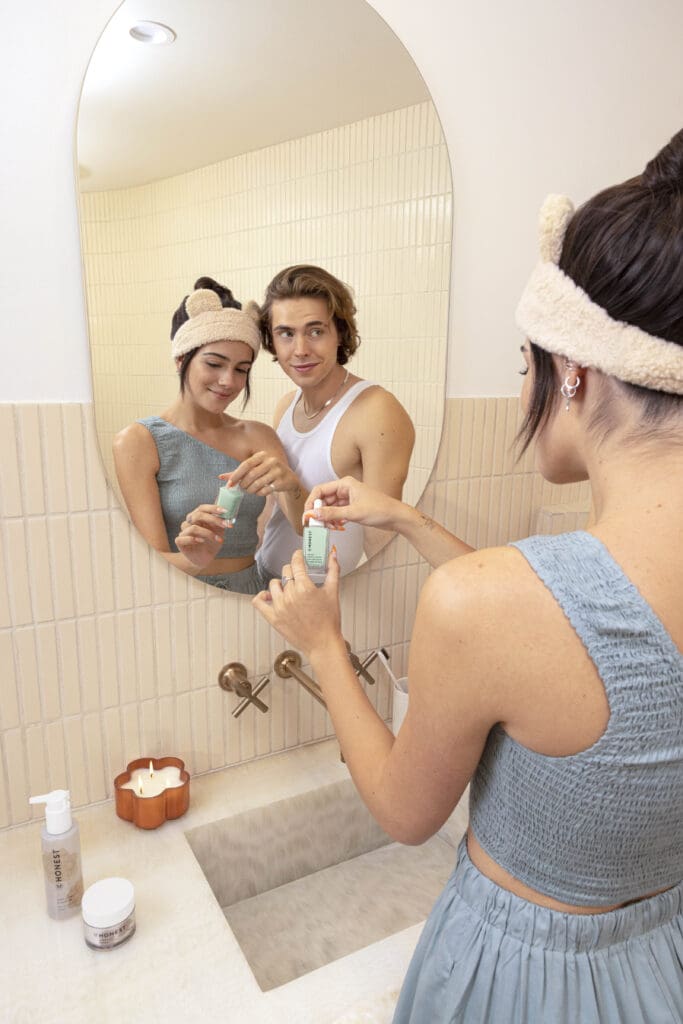
Casting Is the Heartbeat of a Lifestyle Campaign
Lifestyle imagery falls apart without thoughtful casting.
Consumers expect to see themselves represented—not idealized versions.
For beauty and wellness brands, casting should be:
Inclusive of all ages
Reflective of a range of skin tones
Representative of different skin textures
Reflective of diverse body types
Aligned with target audience demographics
Comfortable in front of the camera
Able to move naturally during “in use” product moments
The goal is to show people who feel real—not models performing forced actions.
Shan’s philosophy centers on real expressions, relaxed body language, genuine smiles, and authentic moments. Agencies value this because authenticity isn’t just “nice”—it performs better.
Locations and Environments Must Feel Lived-In, Not Styled-Perfect
Lifestyle campaigns work because viewers can imagine themselves in the scene.
Agencies should choose locations that feel:
Warm, cozy, and natural for skincare routines
Bright, airy, and minimal for clean beauty brands
Earthy and grounded for wellness brands
Modern and polished for prestige cosmetics
Casual and comfortable for everyday beauty moments
Details matter. Objects should feel intentional, not promotional. A towel draped casually. A cup of tea nearby. Natural morning light streaming in.
When the environment feels authentic, the product feels accessible.
Lighting That Supports Both Beauty and Lifestyle Aesthetics
Lifestyle lighting is one of the hardest elements to balance because it must support:
Skin tone accuracy
Real texture visibility
Cosmetics color integrity
Product visibility in “in use” moments
A natural, relatable mood
As a Los Angeles lifestyle and beauty photographer, I use lighting approaches that feel organic:
Soft indirect window light
Warm ambient interior light
Directional daylight for skincare
Golden hour for emotional outdoor shots
Minimal fill to preserve realness
Controlled bounce to support complexion
Natural Movement Is Essential—Forced Actions Break the Illusion
Lifestyle campaigns are built on genuine movement.
In beauty + wellness shoots, that includes:
Applying skincare naturally
Mist spraying while the model smiles
Hair moving effortlessly in motion
Light makeup touches between laughs
Reaching for a product mid-moment
Stretching, breathing, relaxing
These subtle actions turn static frames into emotional storytelling.
Agencies choose photographers who understand how to direct movement without freezing or forcing it.
Integrating Products Without Making the Moment Feel Staged
This is one of the biggest challenges agencies face.
Consumers today are highly aware of when a product shot feels “placed in the frame” versus when it feels integrated.
Strong lifestyle shoots place the product in moments that feel:
Functional
Useful
Relevant
Emotional
Unforced
The product should support the story, not interrupt it.
Shan’s approach is to build scenes where the product naturally belongs—rather than building a scene around the product.
Why Stills + Motion Matter for Lifestyle Campaigns
Agencies increasingly budget for both in a single shoot day:
Lifestyle stills (hero + secondary)
Short motion clips
Behind-the-scenes moments
Texture application videos
Vertical lifestyle videos for social
Slow-motion hair movement
Natural fragrance storytelling moments
A unified stills + motion approach ensures that:
Color matches
Lighting matches
Wardrobe and makeup match
The brand identity remains consistent
The story flows across platforms
This is a major reason agencies increasingly prefer photographers who direct both still and motion assets.
Post-Production That Preserves Realness
A lifestyle campaign loses credibility if retouching goes too far.
Post-production should:
Maintain natural skin texture
Preserve color accuracy for cosmetics
Avoid changing real features
Remove distractions, not reality
Maintain the emotion of the moment
Lifestyle imagery demands restraint and respect for authenticity.
Conclusion: High-Performance Lifestyle Campaigns Start With Realism and Collaboration
Lifestyle advertising in 2026 is rooted in human connection. Agencies and production companies that invest in honest, relatable, beautifully crafted lifestyle imagery will outperform traditional product-first campaigns.
The key to success is choosing a photographer who understands:
Emotional brand identity
Casting that reflects real life
Lighting that honors natural beauty
Movement that feels authentic
Environments that tell stories
Stills + motion integration
Post-production restraint
Collaborative pre-production
In a world where consumers crave connection, lifestyle photography is the bridge.
And when executed with intention, it becomes one of the most effective storytelling tools a beauty or wellness brand can have.
